 Reven
Reven 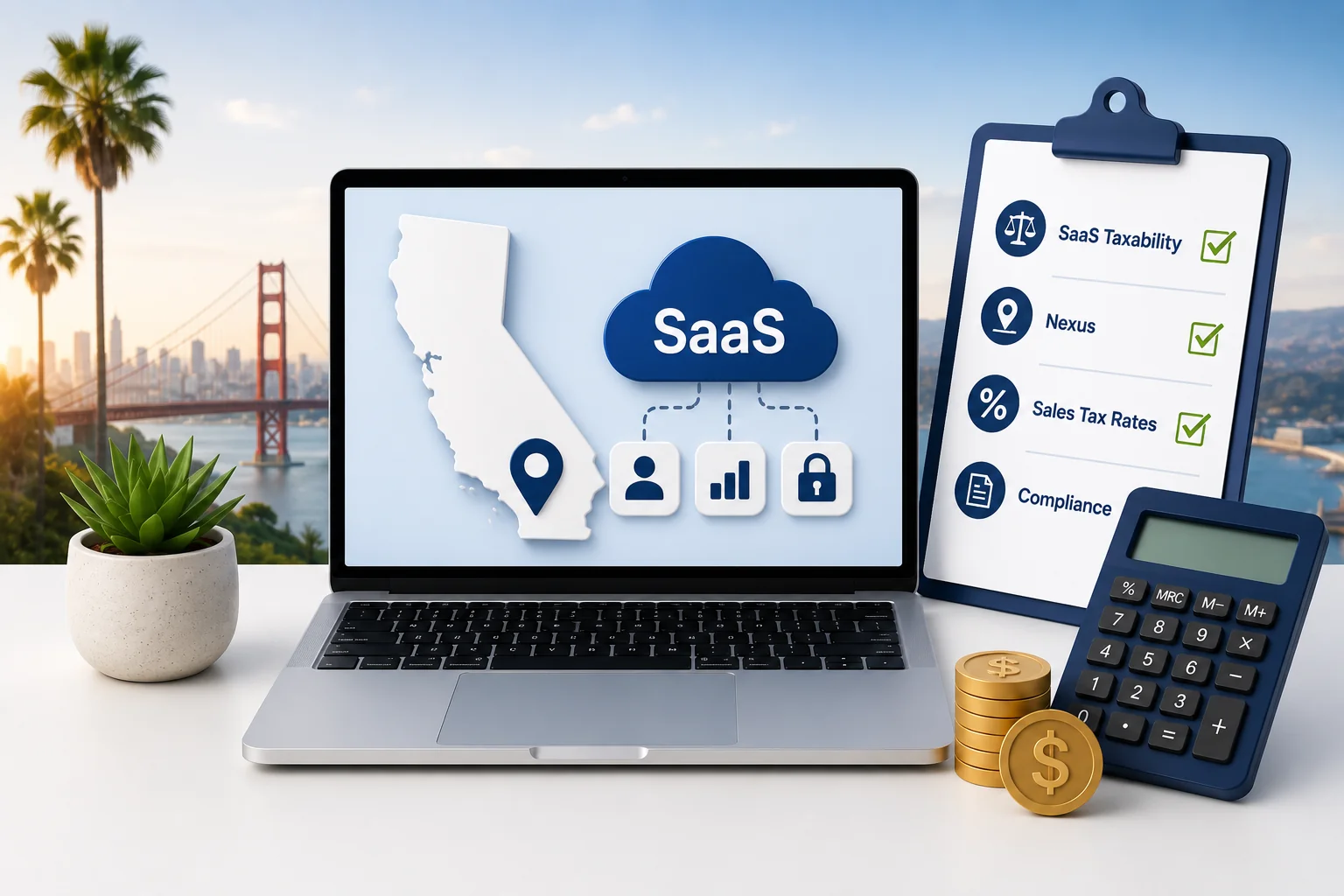
California has long been one of the most nuanced states when it comes to taxing technology products, and California SaaS sales tax continues to be a topic that confuses many businesses. Unlike many other states that have moved to broadly tax digital products and cloud-based services, California takes a more reserved approach but that does not mean SaaS businesses are entirely off the hook. Knowing exactly where your product falls under California's tax rules is essential for staying compliant and avoiding unexpected liabilities.
Is SaaS Taxable in California?
The short answer is: generally, no but it depends heavily on how your software product is structured and delivered. California's sales tax framework was largely built around tangible personal property, and software delivered purely as a cloud-based service without any transfer of tangible media or downloadable components has traditionally not been subject to sales tax in the state. The California Department of Tax and Fee Administration (CDTFA) has historically held that SaaS, when delivered entirely via the internet with no transfer of software code or tangible media to the customer, does not constitute a taxable sale of tangible personal property.
However, this does not mean every product marketed as "SaaS" automatically avoids taxation. California's rules draw important distinctions between different types of software delivery models. If a customer receives a download of software, if there is any transfer of code to the user's device, or if the service involves a combination of taxable and non-taxable elements, the analysis becomes significantly more complicated. Businesses must carefully evaluate what they are actually selling — not just what they call it — to determine their California sales tax on SaaS obligations.
There are a few key categories to understand when analyzing California's approach to taxing software:
- Prewritten (Canned) Software: Software that is delivered on tangible media, such as a CD or USB drive, is generally taxable in California as tangible personal property. This applies whether the software is custom or prewritten.
- Downloaded Software: When prewritten software is electronically downloaded to a customer's device, California generally treats this as taxable. The CDTFA has taken the position that downloaded software can constitute a transfer of tangible personal property in some circumstances.
- True SaaS / Hosted Software: When the software is hosted on the vendor's servers and accessed remotely through a browser or API with no code transferred to the customer's device California generally does not impose sales tax. This is the core of what most modern SaaS businesses offer.
- Hybrid Models: Products that combine SaaS elements with downloadable components, APIs that install on a device, or bundled services may trigger partial tax obligations and require careful allocation.
One of the most important things to understand about sales tax on SaaS in California is that the law has not remained static. California legislators have periodically explored expanding the sales tax base to include digital services, and future changes could shift the current treatment of SaaS significantly. In 2026, California has been actively discussing proposals that would broaden the definition of taxable services to include software-as-a-service and other digital products, which would represent a major shift from the current framework. Businesses should monitor legislative developments closely, as what is not taxable today may become taxable in the near future.
It is also worth noting that California's complex tax environment is compounded by the fact that local jurisdictions can add their own layers to the state base rate. California has one of the highest combined state and local sales tax rates in the country, which means that if the rules do change to include SaaS, the financial impact on businesses selling into the state could be substantial. Understanding the California sales tax landscape thoroughly is critical for any SaaS company with customers in the state.
What SaaS Companies Should Watch Out For in California
Even though pure SaaS may currently escape California's sales tax net, there are several situations where SaaS companies can find themselves unexpectedly liable. Being proactive about identifying these risk areas is key to maintaining compliance.
First, mixed or bundled offerings are a significant risk area. Many SaaS companies offer products that include downloadable desktop applications, mobile apps that install natively on a device, API integrations that require local code execution, or physical hardware components. If any part of a transaction involves the transfer of tangible property or downloadable software, the taxability of the entire transaction may need to be evaluated. In some cases, California requires businesses to unbundle these elements and tax only the tangible or downloadable portions. In other cases, if the taxable element is not separately stated on the invoice, the entire transaction could be treated as taxable.
Second, the concept of economic nexus has changed the compliance landscape for SaaS businesses significantly. Even if a California-based business has no physical presence in a particular state, the post-South Dakota v. Wayfair landscape means that revenue thresholds can trigger sales tax obligations. In California, a seller establishes economic nexus if they exceed $500,000 in sales into the state in the current or prior calendar year. For SaaS companies with large California customer bases, this threshold is often crossed quickly, meaning they must register, collect, and remit California sales tax on any taxable transactions even if those transactions are limited in scope given the current SaaS exemption.
Third, custom software considerations matter. California distinguishes between prewritten and custom software in some contexts. Custom software designed specifically for a single customer's unique needs may receive different treatment than off-the-shelf SaaS products sold to many customers. SaaS businesses that offer significant customization or professional services alongside their software product should ensure they understand how those services are classified and whether any portion of their contracts may be deemed taxable.
- Review all product offerings to determine whether any involve downloadable software or tangible media delivery.
- Ensure invoices clearly separate taxable and non-taxable elements when offering bundled services.
- Monitor economic nexus thresholds in California and register for a seller's permit once the threshold is crossed.
- Stay updated on California legislative proposals that may expand the definition of taxable services to include SaaS.
- Consult with a tax professional familiar with California's CDTFA guidance on digital services and cloud computing.
Another area that deserves attention is the potential for sales tax exposure related to professional services bundled with SaaS. If a SaaS company charges customers for implementation, onboarding, training, or consulting as part of the same contract as the software subscription, and if those services are not separately itemized, tax authorities may attempt to apply sales tax to the entire contract value. Keeping contracts and invoices clearly structured with distinct line items for different types of services can help protect businesses from this type of exposure.
The evolving landscape of California SaaS sales tax also means that businesses need to keep documentation and records in good order. In the event of an audit by the CDTFA, having clear records that demonstrate the nature of the software delivery model including evidence that no code or tangible property was transferred to customers can be the difference between a clean audit and a significant tax assessment. Many SaaS companies have faced unexpected assessments not because they were clearly taxable, but because they lacked sufficient documentation to support their non-taxable treatment.
Automate California Sales Tax Compliance with Reven
Reven is built specifically for the needs of growing software and technology businesses navigating the complexities of sales tax on SaaS in California and across all U.S. states. Rather than spending hours interpreting CDTFA guidance or worrying about whether a legislative change has altered your tax obligations, Reven provides an automated, continuously updated compliance engine that keeps your business on the right side of the rules. Its platform tracks your economic nexus exposure across all states, automates tax calculations at the transaction level, and streamlines the filing and remittance process so your finance team can focus on growth rather than tax administration.
As California continues to evaluate expanding its sales tax base, the companies that will be best positioned are those that already have robust compliance infrastructure in place. Retroactive compliance is far more expensive and disruptive than building systems proactively. Whether you are a startup just beginning to acquire California customers or an established SaaS company with a large California revenue base, having the right tools and processes in place today can save significant time, money, and stress down the road.
- Automated nexus tracking across all U.S. jurisdictions, including California's $500,000 economic nexus threshold.
- Real-time tax calculation engine updated to reflect current CDTFA guidance and any legislative changes.
- Transaction-level product classification to distinguish taxable and non-taxable SaaS elements.
- Exemption certificate collection and management for B2B transactions and resellers.
- Streamlined filing and remittance to minimize the administrative burden on your finance team.
Get a free nexus analysis and see which states you owe sales tax in: reven.co

CEO @Reven
Barkin Doganay is the Co-founder and CEO of Reven AI, an AI-native accounting and sales tax automation platform that automates bookkeeping, accounting, sales tax, and fractional accounting workflows end-to-end in a single system. Previously, he was the co-founder of Kintsugi AI, one of the fastest-growing sales tax automation startups in Silicon Valley. As a founder and operator, Barkin has deep expertise in accounting, bookkeeping, tax compliance, and AI-driven financial workflows for companies. He received his Bachelor of Science in Electrical Engineering & Computer Science and Bachelor of Arts in Economics from Yale University, and his MBA from Massachusetts Institute of Technology.