 Reven
Reven 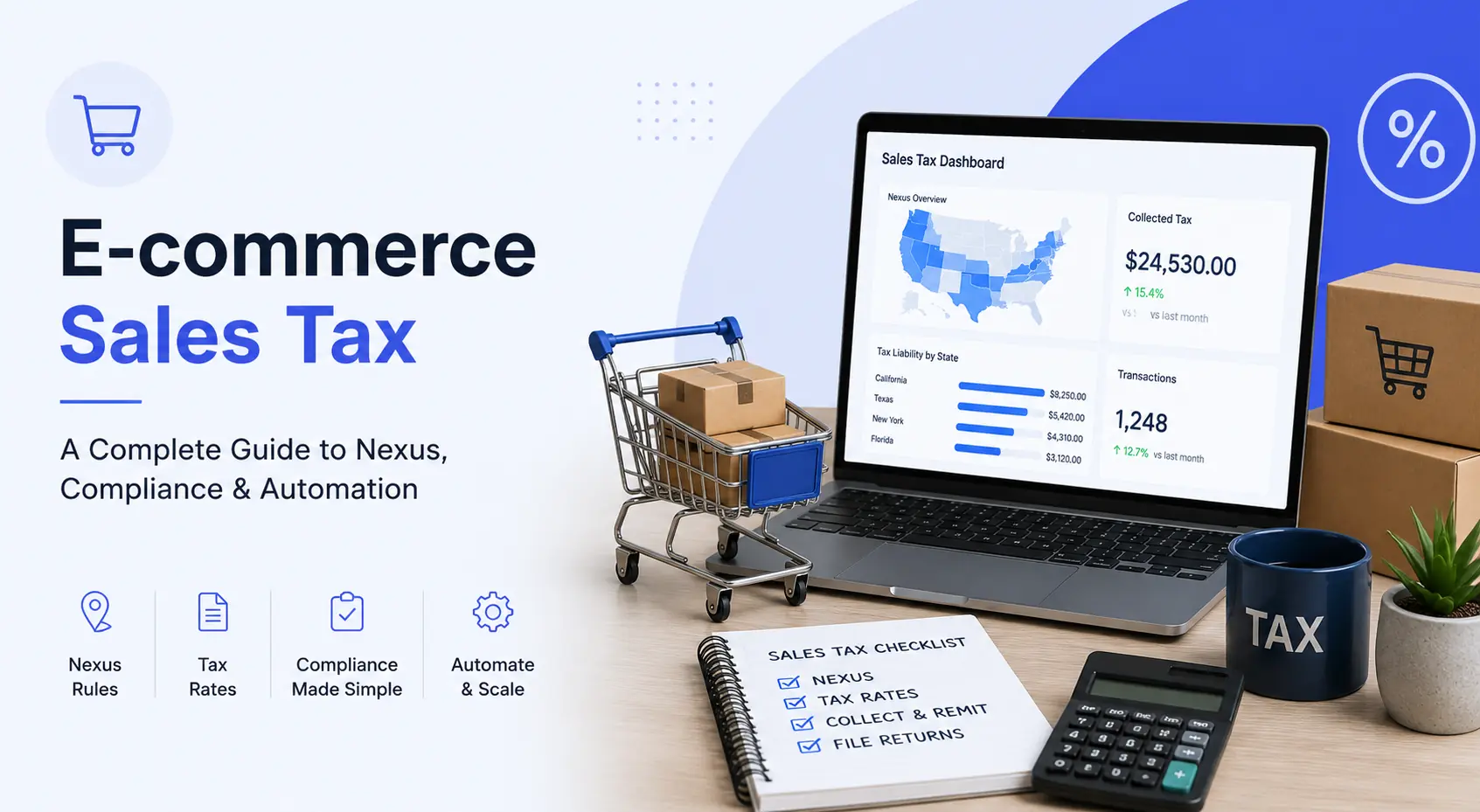
Ecommerce businesses face increasingly complex tax obligations as states modernize their tax collection systems. The year 2026 brings new challenges for online retailers navigating sales tax requirements across multiple jurisdictions. Understanding these evolving regulations helps businesses maintain compliance while avoiding costly penalties. Modern technology solutions now streamline what once required extensive manual tracking. Business owners must stay informed about changing nexus thresholds, exemption criteria, and filing requirements. This comprehensive guide explores essential aspects of e-commerce sales tax management for the current landscape.
How Does Sales Tax Work for E-commerce?
Online businesses collect sales tax from customers at the point of purchase. The tax rate depends on the customer's location rather than the business's headquarters. States require businesses to register for sales tax permits before collecting taxes. Registration triggers ongoing obligations for filing returns and remitting collected taxes.
Economic nexus rules determine when businesses must collect sales tax in each state. These thresholds typically involve revenue amounts or transaction counts within a specific timeframe. Physical presence no longer serves as the sole determining factor for tax obligations. Remote sellers often exceed nexus thresholds through online sales alone.
Tax calculations consider state, county, and local rates that apply to specific addresses. Product categories may face different tax treatments based on local regulations. Some items qualify for exemptions while others face additional taxes beyond standard rates. Sales tax compliance for ecommerce requires accurate rate determination for every transaction location.
The collection process begins when customers add items to their shopping carts. Modern ecommerce platforms calculate taxes automatically based on shipping destinations. Real-time rate lookups ensure accuracy for the thousands of tax jurisdictions across the United States. Ecommerce sales tax software integrates seamlessly with existing checkout systems to provide transparent pricing.
Businesses must maintain detailed records of all transactions and collected taxes. Documentation includes customer information, product details, tax rates applied, and exemption certificates when applicable. States conduct audits to verify proper collection and remittance procedures. Accurate record-keeping protects businesses during audit processes.
Filing frequencies vary by state and sales volume with options ranging from monthly to annual returns. High-volume sellers typically face monthly filing requirements while smaller businesses may qualify for quarterly or annual schedules. Each state sets its own deadlines and penalty structures for late filings or payments.
Technology solutions streamline the entire process from initial collection through final remittance. Automated systems handle rate updates, calculate taxes accurately, and generate required reports. Sales tax for ecommerce operations becomes manageable through proper system implementation and consistent procedures across all sales channels.
State-by-State Breakdown of E-commerce Sales Tax Requirements
| State | Economic Nexus Threshold | State Rate | Combined Tax Rate | Notes |
|---|---|---|---|---|
| Alabama | $250,000 | 4.00% | 4.00%–11.00% | High local tax variation |
| Alaska | $100,000 | 0.00% | 0.00%–7.50% | No statewide sales tax; local taxes apply |
| Arizona | $100,000 | 5.60% | 5.60%–11.20% | Destination/local rates matter |
| Arkansas | $100,000 or 200 transactions | 6.50% | 6.50%–11.50% | Transaction rule still applies |
| California | $500,000 | 6.00% | 7.25%–11.25% | High local tax variation |
| Colorado | $100,000 | 2.90% | 2.90%–11.20% | Complex home-rule jurisdictions |
| Connecticut | $100,000 and 200 transactions | 6.35% | 6.35% | Dual threshold system |
| Delaware | No sales tax | 0.00% | 0.00% | No state sales tax |
| Florida | $100,000 | 6.00% | 6.00%–8.00% | Lower threshold requirement |
| Georgia | $100,000 or 200 transactions | 4.00% | 4.00%–9.00% | Transaction rule applies |
| Hawaii | $100,000 or 200 transactions | 4.00% | 4.00%–4.50% | General excise tax structure |
| Idaho | $100,000 | 6.00% | 6.00%–9.00% | Local option taxes may apply |
| Illinois | $100,000 | 6.25% | 6.25%–11.00% | Transaction threshold repealed in 2026 |
| Indiana | $100,000 | 7.00% | 7.00% | Flat statewide rate |
| Iowa | $100,000 | 6.00% | 6.00%–8.00% | Local option taxes may apply |
| Kansas | $100,000 | 6.50% | 6.50%–10.60% | Local rates can be significant |
| Kentucky | $100,000 | 6.00% | 6.00% | Transaction rule applies |
| Louisiana | $100,000 | 5.00% | 5.00%–12.00% | Complex local tax administration |
| Maine | $100,000 | 5.50% | 5.50% | Flat statewide rate |
| Maryland | $100,000 or 200 transactions | 6.00% | 6.00% | Transaction rule applies |
| Massachusetts | $100,000 | 6.25% | 6.25% | Flat statewide rate |
| Michigan | $100,000 or 200 transactions | 6.00% | 6.00% | Transaction rule applies |
| Minnesota | $100,000 or 200 transactions | 6.88% | 6.88%–9.875% | Local taxes may apply |
| Mississippi | $250,000 | 7.00% | 7.00%–8.00% | Higher sales threshold |
| Missouri | $100,000 | 4.23% | 4.23%–10.10% | Local rates vary widely |
| Montana | No sales tax | 0.00% | 0.00% | No state sales tax |
| Nebraska | $100,000 or 200 transactions | 5.50% | 5.50%–7.50% | Transaction rule applies |
| Nevada | $100,000 or 200 transactions | 4.60% | 4.60%–8.27% | County-level rates vary |
| New Hampshire | No sales tax | 0.00% | 0.00% | No state sales tax |
| New Jersey | $100,000 or 200 transactions | 6.63% | 6.63% | Transaction rule applies |
| New Mexico | $100,000 | 5.13% | 5.13%–9.06% | Gross receipts tax structure |
| New York | $500,000 and 100 transactions | 4.00% | 4.00%–8.88% | Dual threshold system |
| North Carolina | $100,000 | 4.75% | 4.75%–7.50% | Transaction threshold repealed |
| North Dakota | $100,000 | 5.00% | 5.00%–8.50% | Local rates may apply |
| Ohio | $100,000 or 200 transactions | 5.75% | 5.75%–8.00% | Transaction rule applies |
| Oklahoma | $100,000 | 4.50% | 4.50%–11.50% | High local tax variation |
| Oregon | No sales tax | 0.00% | 0.00% | No state sales tax |
| Pennsylvania | $100,000 | 6.00% | 6.00%–8.00% | Local taxes in limited areas |
| Rhode Island | $100,000 or 200 transactions | 7.00% | 7.00% | Transaction rule applies |
| South Carolina | $100,000 | 6.00% | 6.00%–9.00% | Local sales taxes may apply |
| South Dakota | $100,000 | 4.20% | 4.20%–6.30% | Transaction threshold repealed |
| Tennessee | $100,000 | 7.00% | 7.00%–10.00% | High base state rate |
| Texas | $500,000 | 6.25% | 6.25%–8.25% | Higher economic nexus threshold |
| Utah | $100,000 | 4.85% | 4.85%–8.85% | Transaction threshold repealed in 2025 |
| Vermont | $100,000 or 200 transactions | 6.00% | 6.00%–7.00% | Transaction rule applies |
| Virginia | $100,000 or 200 transactions | 4.30% | 5.30%–8.00% | Regional rate differences |
| Washington | $100,000 | 6.50% | 6.50%–10.40% | High combined rate potential |
| West Virginia | $100,000 or 200 transactions | 6.00% | 6.00%–7.00% | Transaction rule applies |
| Wisconsin | $100,000 | 5.00% | 5.00%–7.90% | Low combined range |
| Wyoming | $100,000 | 4.00% | 4.00%–6.00% | Local rates capped lower |
States continue updating their economic nexus thresholds and enforcement policies regularly. Businesses must monitor these changes to maintain compliance across all relevant jurisdictions. Some states provide grace periods for new nexus obligations while others enforce immediate compliance.
Local tax jurisdictions create additional complexity beyond state-level requirements. Counties, cities, and special districts often impose their own tax rates on top of state taxes. California demonstrates this complexity with combined rates reaching nearly twelve percent in some areas.
Dual threshold systems require businesses to meet both revenue and transaction criteria before triggering nexus. New York's approach combines dollar thresholds with minimum transaction counts for comprehensive coverage. This system captures high-volume low-value sellers alongside traditional revenue-based thresholds.
Filing frequency requirements differ based on sales volume within each state. High-volume sellers may face monthly filing obligations while smaller businesses file quarterly or annually. Payment deadlines often precede filing deadlines by several days across multiple states.
Sales Tax Nexus for Online Sales
Nexus establishes the connection between businesses and states that creates tax obligations. Physical nexus occurs when businesses maintain offices, warehouses, or employees within state boundaries. Economic nexus triggers through sales volume or transaction counts regardless of physical presence.
The Supreme Court's Wayfair decision in 2018 authorized states to impose economic nexus requirements. Most states now enforce economic nexus thresholds for remote sellers. These thresholds typically range from $100,000 to $500,000 in annual sales revenue. Some states include transaction count requirements alongside revenue thresholds.
Marketplace facilitator laws require platforms to collect taxes on behalf of third-party sellers. Amazon, eBay, and similar platforms now handle tax collection for many transactions. Sellers using these platforms may still face direct obligations in certain circumstances. Sales tax for ecommerce businesses requires understanding both direct and marketplace facilitator scenarios.
Economic nexus calculations include all sales into a state regardless of payment method or shipping arrangement. Threshold bases vary by state and may be based on gross sales, retail sales, or taxable sales. Marketplace sales may also be included or excluded depending on the state. Drop-shipping arrangements can create a nexus in states where third-party suppliers fulfill orders. Affiliate marketing relationships may also establish nexus connections through partner activities.
Click-through nexus rules apply when businesses use in-state affiliates to generate referral traffic. These relationships create tax obligations even without direct physical presence or high sales volumes. Commission payments to in-state partners often trigger immediate registration requirements.
Attribution nexus occurs when businesses have ownership relationships with entities maintaining physical presence in target states. Parent companies, subsidiaries, and related entities can create nexus through their combined activities. Ecommerce sales tax software systems help track these complex relationship-based nexus scenarios.
Nexus obligations begin immediately once thresholds are exceeded in most states. Some states provide grace periods for registration and initial compliance activities. Retroactive nexus enforcement can create significant liability for businesses unaware of their obligations. Regular monitoring prevents unexpected compliance gaps.
Sales Tax Exemption for Online Sales
Certain products and customer types qualify for sales tax exemptions in various states. Resale exemptions apply when customers purchase items for resale rather than personal use. Educational institutions, nonprofits, and government entities often qualify for organizational exemptions.
Product-based exemptions commonly apply to groceries, medications, and clothing in specific states. Digital products face varying treatment with some states taxing software while exempting others. Services may qualify for exemptions depending on their nature and state regulations. Food items often receive preferential treatment with many states exempting unprepared groceries from taxation.
Medical devices and prescription medications typically qualify for exemptions across most jurisdictions. Manufacturing equipment purchases for production use frequently receive exemption status. Raw materials used in manufacturing processes may qualify for specialized exemption categories depending on state policies.
Exemption certificates document customers' eligibility for tax-free purchases. Businesses must collect and maintain these certificates to support exemption claims. Invalid or missing certificates expose businesses to liability for uncollected taxes. Sales tax on ecommerce transactions requires proper exemption documentation and verification procedures.
Certificate validation involves checking expiration dates and ensuring proper completion of all required fields. Some states require annual renewal while others provide multi-year validity periods. Digital certificate management systems help businesses track expiration dates and renewal requirements efficiently.
Fraudulent exemption claims create significant liability risks for businesses that fail to verify customer eligibility properly. State auditors regularly review exemption documentation during compliance examinations. Training staff to recognize valid exemptions helps prevent costly mistakes during the sales process.
Six Ecommerce Sales Tax Best Practices
Successful ecommerce tax management requires systematic approaches that address common compliance challenges. These six proven strategies help businesses maintain accurate tax collection while minimizing administrative burden. Implementation of structured processes reduces errors and ensures consistent compliance across all jurisdictions.
Regular assessment of tax obligations prevents costly oversights as business operations expand. Proactive management approaches identify potential issues before they create compliance problems. Documented procedures ensure consistency when multiple team members handle tax-related responsibilities.
Determine Where You Have Sales Tax Nexus and How It Works
Regular nexus monitoring prevents compliance gaps as businesses grow into new states. Revenue tracking systems should flag approaching thresholds before obligations begin. Professional services help businesses understand complex nexus rules across multiple jurisdictions. Visit Reven for comprehensive nexus analysis tools and expert guidance.
Nexus rules change frequently as states update their economic thresholds and enforcement policies. Monthly reviews of sales data help identify when businesses approach nexus thresholds in new states. Documentation of nexus determinations provides audit support for compliance decisions.
Multi-state businesses face complex nexus scenarios involving physical presence, economic activity, and marketplace facilitator relationships. Understanding how different types of business activities create nexus helps prioritize compliance efforts. Regular consultation with tax professionals ensures accurate interpretation of evolving nexus standards.
Register for a Sales Tax Permit
State registration processes vary in complexity and timeframe requirements. Some states offer online registration while others require paper applications. Registration triggers immediate collection obligations even before receiving permit documentation. Early registration prevents penalties for collecting taxes without proper authorization.
Documentation requirements for registration include business formation papers, federal tax identification numbers, and operational details. Some states require bonds or deposits before issuing permits to new registrants. Processing times range from immediate online approvals to several weeks for complex applications.
Multi-state registration requires understanding each state's specific requirements and procedures. Centralized tracking systems help monitor registration status across all relevant jurisdictions. Professional registration services can expedite the process while ensuring accurate completion of required forms.
Know Your Ecommerce Sales Tax Exemptions
Exemption rules differ significantly between states and product categories. Documentation requirements vary for different exemption types and customer classifications. Regular training helps staff recognize valid exemption scenarios and required documentation. Automated systems can flag potential exemptions during the sales process.
Common exemptions include resale certificates, nonprofit exemptions, and manufacturing exemptions that require specific documentation. Certificate management systems organize exemption documents and track expiration dates for periodic renewals. Invalid exemptions expose businesses to liability for uncollected taxes plus penalties.
Product-based exemptions require understanding how different items classify under state tax codes. Clothing exemptions may have dollar limits while food exemptions exclude prepared items. Digital products face varying treatment requiring careful analysis of state-specific regulations.
Collect, Report, and File Your Sales Tax Returns
Filing frequencies depend on sales volume and state requirements ranging from monthly to annually. Return deadlines vary by state with some requiring payment before filing deadlines. Automated systems help ensure timely filing and payment across multiple jurisdictions. Professional support through Reven streamlines complex multi-state compliance requirements.
Return preparation requires accurate record-keeping of all taxable transactions, exemptions, and adjustments. Reconciliation procedures ensure reported amounts match collected taxes from the accounting system. Electronic filing systems reduce processing time while providing immediate confirmation of successful submissions.
Payment processing requires coordination between filing deadlines and cash flow management. Some states offer discounts for early payment while others impose penalties for late remittance. Automated payment systems prevent missed deadlines while maintaining proper cash flow controls.
Create a Visible Schedule for Sales Tax Returns
Calendar systems should track all filing deadlines across relevant states. Different states may require different frequencies creating complex scheduling requirements. Advance notifications help teams prepare returns before deadline pressure builds. Backup procedures ensure continuity when primary staff members are unavailable.
Visual scheduling tools help teams understand upcoming obligations and allocate preparation time appropriately. Color-coding systems can distinguish between different types of obligations and priority levels. Integration with task management systems ensures accountability for completion of required activities.
Seasonal businesses may face varying filing requirements based on active selling periods. Holiday seasons often increase filing frequencies requiring adjusted scheduling approaches. Documentation of scheduling decisions provides consistency when staff changes occur.
Consider Automating Sales Tax Bookkeeping and Payments
Automated systems reduce manual errors while ensuring consistent compliance procedures. Integration with existing accounting systems eliminates duplicate data entry requirements. Real-time calculations provide accurate tax amounts for customer transactions. Ecommerce sales tax software solutions handle rate updates and nexus monitoring automatically.
Modern automation tools connect directly with ecommerce platforms to capture transaction data automatically. API integrations ensure seamless data flow between sales systems and tax compliance platforms. Automated reconciliation features identify discrepancies requiring manual review.
Cost-benefit analysis helps determine when automation investment provides sufficient returns through reduced labor costs. Small businesses may benefit from basic automation while larger operations require comprehensive enterprise solutions. Scalable automation grows with business needs without requiring complete system replacements.
Ecommerce Sales Tax When Selling Overseas
International sales create additional complexity beyond domestic sales tax requirements. Value-added tax systems in other countries differ significantly from US sales tax structures. Some countries require foreign businesses to register for local tax collection obligations.
Digital services face particular scrutiny under international tax regimes. The European Union's digital services tax affects many US-based ecommerce businesses. Understanding treaty obligations helps businesses avoid double taxation scenarios.
Export documentation may provide exemptions for certain international transactions. Proper classification of international sales affects both sales tax and income tax obligations. Sales tax for ecommerce companies with global operations requires specialized expertise in international tax law.
Currency conversion requirements add another layer of complexity to international tax calculations. Exchange rates fluctuate daily, affecting the actual tax amounts collected from customers. Businesses must determine appropriate conversion methods for consistent reporting across multiple tax jurisdictions.
Shipping and customs documentation often determines tax treatment for cross-border transactions. Free trade agreements may provide reduced tax rates for qualifying products and destinations. Import duties and taxes collected by customs authorities differ from traditional sales tax obligations.
Customer location verification becomes critical for determining applicable international tax rates. Digital products may face different treatment than physical goods in international tax systems. Some countries exempt export sales while others require full tax collection regardless of destination.
Third-party logistics providers may create unexpected nexus obligations in foreign countries. Inventory stored in international fulfillment centers triggers registration requirements in those jurisdictions. Businesses must track their global footprint carefully to identify all potential tax obligations.
Channel-Specific Sales Tax
Different ecommerce platforms handle sales tax collection through varying approaches and capabilities. Understanding platform-specific tax features helps businesses choose appropriate solutions for their needs. Each marketplace has unique policies regarding seller responsibilities and automated collection services.
Platform integration affects how businesses manage tax compliance across multiple sales channels. Some platforms provide comprehensive tax management while others require external solutions. Sellers must understand their obligations on each platform they use for sales.
Marketplace facilitator laws impact how taxes are collected on different platforms. These laws require platforms to collect taxes on behalf of sellers in most states. However, seller responsibilities vary depending on platform policies and transaction types.
Shopify Tax
Shopify provides built-in tax calculation features for businesses using their platform. The system automatically updates tax rates based on customer shipping addresses. Manual overrides allow businesses to handle complex exemption scenarios. Integration with third-party tax services provides enhanced accuracy for complex situations.
Tax settings within Shopify require proper configuration to ensure accurate calculations. Businesses can set up tax exemptions for specific products or customer groups. The platform supports both percentage-based and fixed-amount tax calculations for different scenarios.
Advanced tax features include support for compound taxes and tax-inclusive pricing. Shopify Plus users access additional customization options for complex tax scenarios. The platform generates tax reports that help with filing and compliance tracking.
Amazon Tax
Amazon handles sales tax collection for most marketplace transactions under facilitator laws. Sellers remain responsible for direct sales outside the marketplace platform. FBA inventory creates physical nexus in states with Amazon fulfillment centers. Sellers must monitor their total nexus exposure including Amazon-related activities.
Amazon's tax collection service covers sales to customers in states with marketplace facilitator laws. The platform automatically calculates and collects appropriate taxes based on delivery addresses. Sellers receive detailed reports showing tax amounts collected on their behalf.
FBA sellers face unique nexus considerations due to inventory storage across multiple states. Amazon warehouses create physical presence that may trigger additional tax obligations. Sellers should track which states house their inventory throughout the year.
Amazon Business transactions may involve tax-exempt customers requiring special handling. The platform provides tools for managing business customer exemptions and documentation. B2B sales often require additional verification steps for tax-exempt status.
eBay Tax
eBay collects sales tax on managed payments transactions in most states. Sellers using other payment methods may retain direct collection responsibilities. Auction-style listings create unique challenges for tax calculation and collection. Fixed-price listings integrate more easily with automated tax systems.
The managed payments system automatically handles tax calculation for eligible transactions. eBay updates tax rates regularly to maintain compliance with current requirements. Sellers receive monthly statements showing taxes collected on their transactions.
International eBay sales face different tax treatment depending on buyer and seller locations. Global shipping programs may affect tax calculation and collection responsibilities. Cross-border transactions require understanding of both domestic and international tax rules.
Business and industrial categories on eBay often involve tax-exempt buyers. The platform provides mechanisms for handling exemption certificates and documentation. Sellers must verify buyer eligibility and maintain proper exemption records.
Etsy Tax
Etsy handles tax collection for transactions processed through their payment system. International sales through Etsy may face different tax treatment. Handmade items may qualify for specific exemptions in certain states. Sellers should understand their obligations for direct customer transactions outside Etsy's system.
The platform automatically calculates taxes based on buyer location and applicable rates. Etsy updates its tax database regularly to reflect current state and local requirements. Sellers can view tax collection details in their payment account dashboard.
Craft and handmade items sold on Etsy may qualify for special tax treatments. Some states provide exemptions for certain handcrafted products or small-scale makers. Sellers should research applicable exemptions in their primary sales markets.
Digital downloads and printable items face varying tax treatment across different states. Some jurisdictions tax digital products while others exempt them from sales tax. Etsy's system attempts to apply appropriate tax treatment based on product type and location.
Custom orders and personalized items may involve different tax considerations than standard products. Rush orders or expedited services might face additional tax implications. Sellers offering customization services should understand how these affect their tax obligations.
Vintage items sold on Etsy typically follow standard sales tax rules for resale goods. Age or collectible status generally does not affect tax treatment for sales purposes. Sellers dealing in vintage goods should maintain proper documentation for inventory valuation.
Make Sales Taxes Easier with Reven
Professional tax management services simplify complex compliance requirements for growing businesses. Reven provides comprehensive solutions for nexus monitoring, registration, and ongoing compliance management. Automated systems integrate with existing ecommerce platforms to provide seamless tax collection.
Reven's platform handles real-time tax calculations for thousands of jurisdictions across the United States. The system automatically updates rates when local governments change their tax structures. This eliminates the burden of manually tracking rate changes in multiple locations. Ecommerce sales tax software integration ensures accurate calculations at the point of sale.
Get a free nexus analysis and see which states you owe sales tax in: Reven contact page.

CEO @Reven
Barkin Doganay is the Co-founder and CEO of Reven AI, an AI-native accounting and sales tax automation platform that automates bookkeeping, accounting, sales tax, and fractional accounting workflows end-to-end in a single system. Previously, he was the co-founder of Kintsugi AI, one of the fastest-growing sales tax automation startups in Silicon Valley. As a founder and operator, Barkin has deep expertise in accounting, bookkeeping, tax compliance, and AI-driven financial workflows for companies. He received his Bachelor of Science in Electrical Engineering & Computer Science and Bachelor of Arts in Economics from Yale University, and his MBA from Massachusetts Institute of Technology.