 Reven
Reven 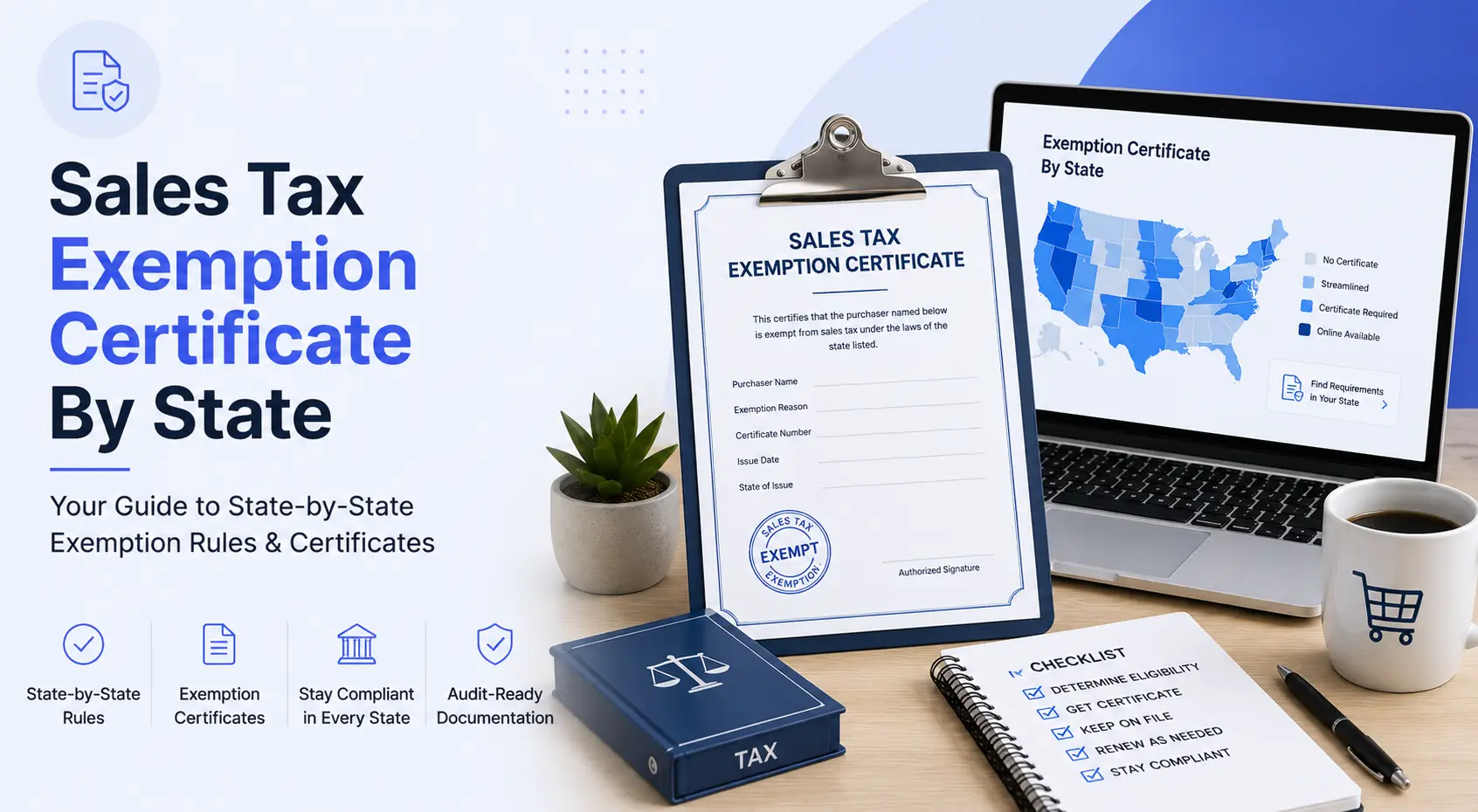
Businesses operating across multiple states face a common challenge: managing sales tax correctly. A sales tax exemption certificate by state allows qualified buyers to purchase goods or services without paying sales tax. Each state sets its own rules, forms, and expiration policies. Understanding these differences helps businesses stay compliant and avoid costly penalties.
Common exemption reasons include resale purposes, nonprofit status, and manufacturing activities. Each state defines its own qualifying categories. A certificate valid in one state may not be accepted in another. Businesses must verify the rules of each state where they operate.
Sales Tax Exemption Certificates by State: A Detailed Overview
Sales tax exemption certificates by state vary significantly in format and requirements. Some states use a single multipurpose certificate. Others require buyers to complete state-specific forms. Below is a state-by-state overview of key exemption certificate details.
| State | Certificate Name / Form | Accepts Multijurisdiction Certificate? | Expiration Policy |
|---|---|---|---|
| Alabama | Alabama Sales Tax Certificate of Exemption | No | No expiration; must update upon change in status |
| Alaska | No state sales tax; local jurisdictions may apply | N/A | N/A |
| Arizona | Arizona Resale Certificate / Form 5000 | No | No set expiration |
| Arkansas | Arkansas Exemption Certificate (Form ST391) | Yes (MTC) | No set expiration; valid as long as info is current |
| California | California Resale Certificate (CDTFA-230) | No | No expiration date |
| Colorado | Colorado Sales Tax Exemption Certificate (DR 0563) | Yes (MTC) | No set expiration |
| Connecticut | CERT-119 / CERT-134 (resale) | No | Must be renewed every 3 years |
| Florida | Florida Annual Resale Certificate (DR-13) | No | Expires December 31 each year |
| Georgia | Georgia Sales Tax Certificate of Exemption (ST-5) | No | No set expiration |
| Illinois | Illinois Sales Tax Exemption Certificate (CRT-61) | No | No set expiration |
| Indiana | Indiana General Sales Tax Exemption Certificate (ST-105) | Yes (MTC) | No set expiration |
| Iowa | Iowa Sales Tax Exemption Certificate (31-014) | Yes (MTC) | No set expiration |
| Kansas | Kansas Exemption Certificate (ST-28) | Yes (MTC) | No set expiration |
| Kentucky | Kentucky Resale Certificate | No | No set expiration |
| Louisiana | Louisiana Department of Revenue Exemption Certificate (R-1064) | No | No set expiration |
| Maine | Maine Resale Certificate (ST-A-119) | No | No set expiration |
| Maryland | Maryland Sales Tax Exemption Certificate | No | No set expiration |
| Massachusetts | Massachusetts Sales Tax Resale Certificate (ST-4) | No | No set expiration |
| Michigan | Michigan Sales and Use Tax Certificate (3372) | No | No set expiration |
| Minnesota | Minnesota Certificate of Exemption (ST3) | No | No set expiration |
| Mississippi | Mississippi Sales Tax Exemption Certificate | No | No set expiration |
| Missouri | Missouri Sales and Use Tax Exemption Certificate (149) | No | No set expiration |
| Nebraska | Nebraska Resale or Exempt Sale Certificate (Form 13) | Yes (MTC) | No set expiration |
| Nevada | Nevada Sales Tax Exemption Certificate | Yes (MTC) | No set expiration |
| New Jersey | NJ Exempt Use Certificate (ST-4) / Resale (ST-3) | No | No set expiration |
| New Mexico | New Mexico NTTC (Nontaxable Transaction Certificate) | No | No set expiration |
| New York | New York Exemption Certificate (ST-119.1 / ST-120) | No | No set expiration; must be kept current |
| North Carolina | NC Streamlined Sales Tax Certificate of Exemption (E-595E) | Yes (SST) | No set expiration |
| North Dakota | North Dakota Exemption Certificate (SFN 21919) | Yes (MTC) | No set expiration |
| Ohio | Ohio STEC (Sales and Use Tax Exemption Certificate) | No | No set expiration |
| Oklahoma | Oklahoma Sales Tax Exemption Certificate (STS 13013) | Yes (MTC) | No set expiration |
| Pennsylvania | Pennsylvania Exemption Certificate (REV-1220) | No | No set expiration |
| Rhode Island | Rhode Island Sales Tax Exemption Certificate | No | No set expiration |
| South Carolina | South Carolina Exemption Certificate (ST-8 / ST-8A) | No | No set expiration |
| South Dakota | South Dakota Exemption Certificate | Yes (SST) | No set expiration |
| Tennessee | Tennessee Sales and Use Tax Blanket Certificate of Resale | No | No set expiration |
| Texas | Texas Sales and Use Tax Exemption Certification (01-339) | No | No set expiration; valid until revoked |
| Utah | Utah Sales Tax Exemption Certificate (TC-721) | Yes (MTC) | No set expiration |
| Vermont | Vermont Sales Tax Exemption Certificate (S-3 / S-3A) | No | No set expiration |
| Virginia | Virginia Sales and Use Tax Certificate of Exemption (ST-10 / ST-11) | No | No set expiration |
| Washington | Washington Reseller Permit | No | Expires every 4 years |
| West Virginia | West Virginia Sales and Use Tax Exemption Certificate | Yes (MTC) | No set expiration |
| Wisconsin | Wisconsin Sales and Use Tax Exemption Certificate (S-211) | No | No set expiration |
| Wyoming | Wyoming Sales Tax Exemption Certificate | Yes (MTC) | No set expiration |
Types of Sales Tax Exemptions Recognized Across States
States recognize several types of exemptions. The most common ones include resale, agricultural use, and nonprofit or government purchases. Manufacturing exemptions also apply in many states. Each type requires a different supporting document or certificate form.
- Resale exemptions: Businesses that purchase goods to resell them can avoid paying sales tax at the point of purchase.
- Nonprofit exemptions: Qualifying nonprofit organizations receive exemptions on purchases used for their exempt purposes.
- Manufacturing exemptions: Items used directly in manufacturing or production often qualify for exemption.
- Agricultural exemptions: Farmers and agricultural businesses may claim exemptions on qualifying farm inputs.
- Government exemptions: Federal and state government entities typically do not pay sales tax on official purchases.
Not every state offers all exemption types. Businesses must check each state's rules before claiming an exemption. Misusing a certificate can result in tax liability and penalties.
Multijurisdiction Exemption Certificates: When One Form Works for Multiple States
The Multistate Tax Commission (MTC) created a uniform exemption certificate. This form works in many participating states. It simplifies the process for businesses operating across state lines. However, not all states accept this certificate.
The Streamlined Sales Tax (SST) program also provides a uniform certificate. States participating in SST accept a standardized form. Businesses should confirm whether a target state accepts MTC or SST certificates. Using the wrong certificate can invalidate the exemption claim.
States like California, Florida, and New York do not accept the MTC certificate. These states require their own specific forms. Always check the official state revenue department website before submitting any certificate.
How to Use a Sales Tax Exemption Certificate Correctly
Buyers must complete the certificate fully and accurately. Incomplete certificates can be rejected by sellers. Sellers must review the certificate before accepting it. Accepting a fraudulent or incomplete certificate shifts tax liability to the seller.
Sellers must keep exemption certificates on file. Most states require sellers to retain these documents for at least three to five years. During an audit, tax authorities can request these records. Missing certificates can lead to back tax assessments.
- Fill in the buyer's name, address, and tax ID number accurately.
- Specify the type of exemption being claimed.
- Describe the items or categories of items being purchased.
- Sign and date the certificate before submitting it.
- Renew the certificate if required by the state.
Expiration and Renewal Rules for Exemption Certificates
Most states do not set a fixed expiration date for exemption certificates. However, some states require periodic renewal. Florida requires an annual renewal. Connecticut requires renewal every three years. Washington State's reseller permits expire every four years.
Even without a formal expiration date, certificates should stay current. If a buyer's information changes, the certificate must be updated. Sellers should periodically verify the accuracy of certificates on file. Outdated information can create compliance risks during audits.
Understanding sales tax exemption certificates by state helps businesses manage renewals more effectively. Setting internal reminders for renewals reduces the risk of using expired documents. Tax compliance software can also track certificate expiration dates automatically.
Penalties for Misuse of Sales Tax Exemption Certificates
Using a sales tax exemption certificate fraudulently carries serious consequences. Buyers who misuse certificates may owe back taxes, interest, and penalties. In some states, fraudulent use constitutes a criminal offense. Tax authorities take certificate misuse seriously.
Sellers who accept invalid certificates without proper review also face risks. If a seller cannot produce a valid certificate during an audit, the state may assess sales tax on the transaction. This makes certificate verification a critical part of the sales process.
Businesses should train their finance and sales teams on certificate requirements. Regular internal audits of certificate files can help identify issues early. Proactive compliance always costs less than reactive corrections.
States Without a Sales Tax: What Businesses Should Know
Five states do not impose a statewide sales tax. These states are Alaska, Delaware, Montana, New Hampshire, and Oregon. Businesses selling to customers in these states do not collect state sales tax. Exemption certificates do not apply at the state level in these jurisdictions.
Alaska is a special case. The state has no sales tax, but many local municipalities do. Businesses selling into Alaska may still need to collect local sales taxes. Local rules vary widely across Alaskan jurisdictions.
Digital Products and Sales Tax Exemptions by State
Digital products present a growing complexity in sales tax law. Some states tax digital goods. Others exempt them. The rules for sales tax exemption certificate by state also extend to digital transactions in many cases.
States like Texas and Washington tax certain digital products. States like California generally do not tax digital downloads. Businesses selling software, e-books, or streaming services must check each state's digital product tax rules separately.
Exemption certificate requirements for digital products also differ. Some states require the same certificates used for physical goods. Others have specific forms for digital transactions. Staying updated on digital sales tax legislation is essential for compliance.
Frequently Asked Questions
Do all states require their own exemption certificate forms?
No, some states accept the MTC uniform certificate or SST certificate. Others, like California and New York, require state-specific forms.
How long must sellers keep exemption certificates on file?
Most states require sellers to retain exemption certificates for three to five years. Sellers should check their specific state's record-keeping requirements.
Can a business use one certificate for purchases in multiple states?
Only in states that accept the MTC or SST multijurisdiction certificate. For other states, separate state-specific certificates are required.
What happens if a seller accepts a fraudulent exemption certificate?
The seller may become liable for the unpaid sales tax. Sellers should always verify certificates before accepting them.
Do exemption certificates expire?
Most states do not set expiration dates, but some do. Florida requires annual renewal, and Washington State permits expire every four years.
Are nonprofit organizations always exempt from sales tax?
Not automatically. Nonprofits must apply for exemption status in each state where they make purchases. Approval requirements vary by state.

CEO @Reven
Barkin Doganay is the Co-founder and CEO of Reven AI, an AI-native accounting and sales tax automation platform that automates bookkeeping, accounting, sales tax, and fractional accounting workflows end-to-end in a single system. Previously, he was the co-founder of Kintsugi AI, one of the fastest-growing sales tax automation startups in Silicon Valley. As a founder and operator, Barkin has deep expertise in accounting, bookkeeping, tax compliance, and AI-driven financial workflows for companies. He received his Bachelor of Science in Electrical Engineering & Computer Science and Bachelor of Arts in Economics from Yale University, and his MBA from Massachusetts Institute of Technology.