 Reven
Reven 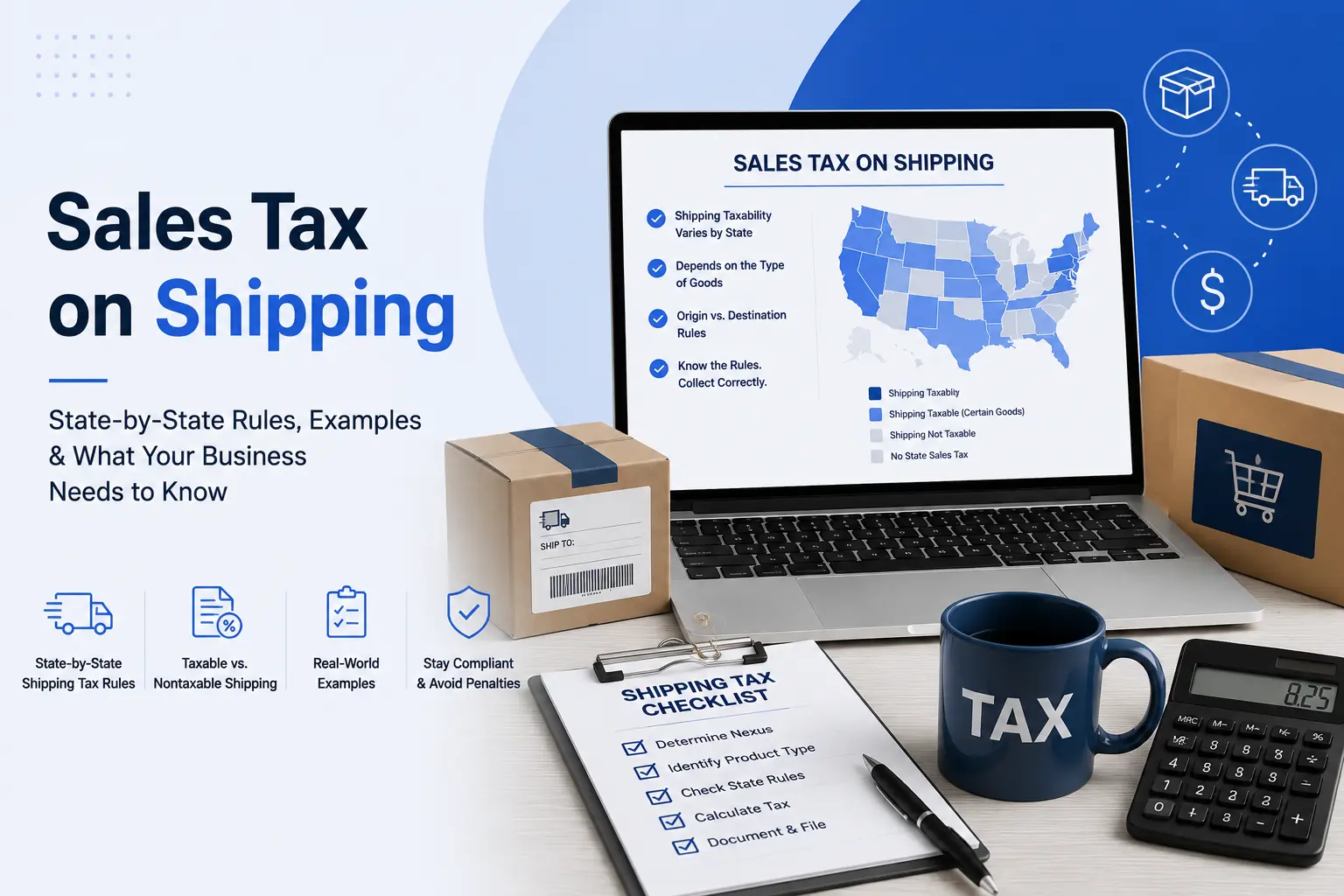
This guide explains how sales tax on shipping works across different states, when shipping charges become taxable, and what ecommerce businesses should know to stay compliant with changing state tax regulations.
Does Sales Tax Include Shipping?
Whether sales tax includes shipping depends entirely on your state's specific tax laws. Many states treat shipping charges differently from the actual product being sold. Some states consider shipping charges as part of the total taxable sale. Other states view shipping as a separate service that remains exempt from taxation.
Shipping tax follows the product. If the underlying item is exempt or non-taxable, the shipping charge is also generally non-taxable.
The taxability of shipping often depends on how you present these charges to customers. States typically distinguish between separately stated shipping charges versus shipping costs bundled into the product price. When you clearly separate shipping charges on invoices, different tax rules may apply compared to including shipping in the total price.
Most states require businesses to collect sales tax for shipping when shipping charges appear bundled with the product price. This bundling makes it difficult for tax authorities to distinguish between the taxable product cost and potentially exempt shipping fees.
What States Charge Sales Tax on Shipping?
These states that charge sales tax on shipping include Arkansas, Connecticut, Georgia, Hawaii, Illinois, Kentucky, Louisiana, Michigan, Mississippi, Nebraska, Nevada, New Mexico, New York, North Carolina, Ohio, Pennsylvania, Rhode Island, South Dakota, Tennessee, Texas, Washington, West Virginia, and Wisconsin.
These states consider shipping charges as part of the total taxable transaction. Businesses selling to customers in these states must add applicable sales tax rates to both product costs and shipping fees. The tax calculation includes the full amount customers pay for shipping services.
Even in states that generally tax shipping, exceptions may apply depending on the taxability of the underlying product, whether shipping is separately stated or bundled, and the specific delivery or shipping conditions. However, the general rule requires tax collection on shipping charges. Business owners should verify current regulations since states occasionally modify their shipping tax policies.
| State | Shipping Tax Treatment |
|---|---|
| Texas | Shipping charges are generally taxable |
| New York | Shipping charges are taxable |
| Pennsylvania | Shipping charges are taxable |
| Washington | Shipping charges are taxable |
| Wisconsin | Shipping charges are taxable |
States Where Shipping Is Not Taxable if Separately Stated
States following this approach include Alabama, Arizona, California, Colorado, Delaware, Florida, Idaho, Indiana, Iowa, Maine, Maryland, Massachusetts, Minnesota, Missouri, North Dakota, Oklahoma, South Carolina, Utah, Vermont, Virginia, and Wyoming.
Note: Delaware, Montana, New Hampshire, and Oregon have no state-level sales tax at all.
These states require businesses to itemize shipping charges separately from product costs to qualify for the exemption. The shipping charge must represent the actual cost of delivery services. States may require businesses to use reasonable shipping rates that reflect true delivery costs.
Businesses must clearly label shipping charges on invoices, receipts, and customer communications. Vague descriptions or bundled pricing may disqualify the exemption. States expect transparent pricing that allows customers to understand exactly what they pay for shipping services.
| State | Shipping Tax Treatment |
|---|---|
| California | Not taxable if separately stated |
| Florida | Not taxable if separately stated |
| Virginia | Not taxable if separately stated |
| Wyoming | Not taxable if separately stated |
| Colorado | May be exempt if separately stated |
Is It Legal to Charge Sales Tax on Shipping?
States have full legal authority to require sales tax collection on shipping charges within their jurisdictions. The Supreme Court's South Dakota v. Wayfair decision established that states can mandate tax collection from out-of-state sellers who meet certain economic thresholds.
Each state legislature determines whether shipping charges fall under their sales tax requirements. States design these policies to generate revenue while supporting their interpretation of what constitutes a taxable transaction. Businesses must follow the specific requirements of each state where they have tax collection obligations.
Legal challenges to shipping tax requirements rarely succeed because states maintain broad authority over sales tax policies. Courts generally uphold state shipping tax laws when these policies apply consistently to all businesses.
Can You Avoid Sales Tax by Shipping Out of State?
Shipping products to customers in other states does not automatically eliminate sales tax obligations. The location where customers receive products typically determines which state's tax laws apply to the transaction. Businesses may owe sales tax to the destination state rather than their home state.
Many states require out-of-state businesses to register for sales tax collection when they exceed certain sales thresholds within the state. These economic nexus laws mean that shipping location alone does not determine tax obligations. Businesses must consider their total sales volume and transaction count in each state.
Some states maintain agreements that simplify tax collection for multi-state businesses. However, these agreements still require appropriate tax collection based on where customers receive their purchases. Moving your business location rarely eliminates sales tax responsibilities.
Do I Charge Sales Tax When Shipping Out of State?
Businesses typically must charge sales tax based on the destination state's requirements when shipping products across state lines. Most states follow destination-based tax rules that apply the tax rates from where customers receive their orders. This means you collect tax according to your customer's state laws rather than your business location.
You need to register for sales tax collection in states where you exceed economic nexus thresholds. These thresholds vary by state but commonly range from $100,000 in annual sales or 200 separate transactions. Once you meet these requirements, you must collect appropriate sales tax from customers in those states.
Origin-based tax states represent exceptions to this general rule. A few states require businesses to charge tax based on where they ship products from rather than destination locations. However, most commerce follows destination-based taxation principles.
eBay Sales Tax on Shipping
eBay automatically calculates and collects sales tax on behalf of sellers in states where the platform has established marketplace facilitator laws. This includes sales tax on shipping charges when required by state law. eBay applies the appropriate tax rates based on the buyer's location and the specific state's shipping tax requirements.
Sellers no longer need to manually calculate or collect sales tax in states where eBay handles tax collection. The platform remits collected taxes directly to state tax authorities. This service simplifies tax compliance for sellers who previously managed these calculations independently.
eBay's tax collection covers both product sales and shipping charges according to each state's specific requirements. Sellers should review their state tax obligations for any sales occurring outside of eBay's automated tax collection system.
Sales Tax Rules for Shipping Out of State
Interstate shipping tax rules require businesses to understand both their home state requirements and destination state obligations. Most states expect businesses to collect tax based on where customers receive their purchases. This creates compliance obligations in multiple states for businesses with geographically diverse customer bases.
Businesses must track their sales volume in each state to determine when they trigger economic nexus requirements. States require registration and tax collection once businesses exceed specified thresholds. These requirements apply regardless of whether the business maintains physical presence in the destination state.
Multi-state businesses often benefit from sales tax automation software that calculates appropriate rates for different destinations. These tools help ensure compliance with varying state requirements for both product sales and shipping charges. Manual tax calculation becomes impractical as businesses expand across multiple states.
- Track nexus thresholds in every state where you sell products
- Separate shipping charges clearly on invoices when beneficial
- Use automated tax tools for destination-based tax compliance
- Review state shipping tax regulations regularly
Make Shipping Sales Tax Compliance Easier With Reven
Navigating sales tax on shipping requires understanding each state's unique requirements and maintaining compliance across multiple jurisdictions. Businesses must carefully track their obligations in different states, properly separate shipping charges when beneficial, and utilize appropriate tools to manage complex tax calculations.
Reven helps ecommerce businesses automate shipping tax calculations, monitor nexus obligations, and simplify multi-state sales tax compliance workflows.
Learn more about ecommerce sales tax compliance solutions through Reven.

CEO @Reven
Barkin Doganay is the Co-founder and CEO of Reven AI, an AI-native accounting and sales tax automation platform that automates bookkeeping, accounting, sales tax, and fractional accounting workflows end-to-end in a single system. Previously, he was the co-founder of Kintsugi AI, one of the fastest-growing sales tax automation startups in Silicon Valley. As a founder and operator, Barkin has deep expertise in accounting, bookkeeping, tax compliance, and AI-driven financial workflows for companies. He received his Bachelor of Science in Electrical Engineering & Computer Science and Bachelor of Arts in Economics from Yale University, and his MBA from Massachusetts Institute of Technology.